Field Notes · 2026 in review
Openfields in 2026: ten apps, one wallet
Openfields started in September 2026 with one idea: open apps for Terra that read the chain directly and hand every transaction to your own wallet. By October there were ten of them. This is what they do, and the rules they share.
Where to start: Ask and Home
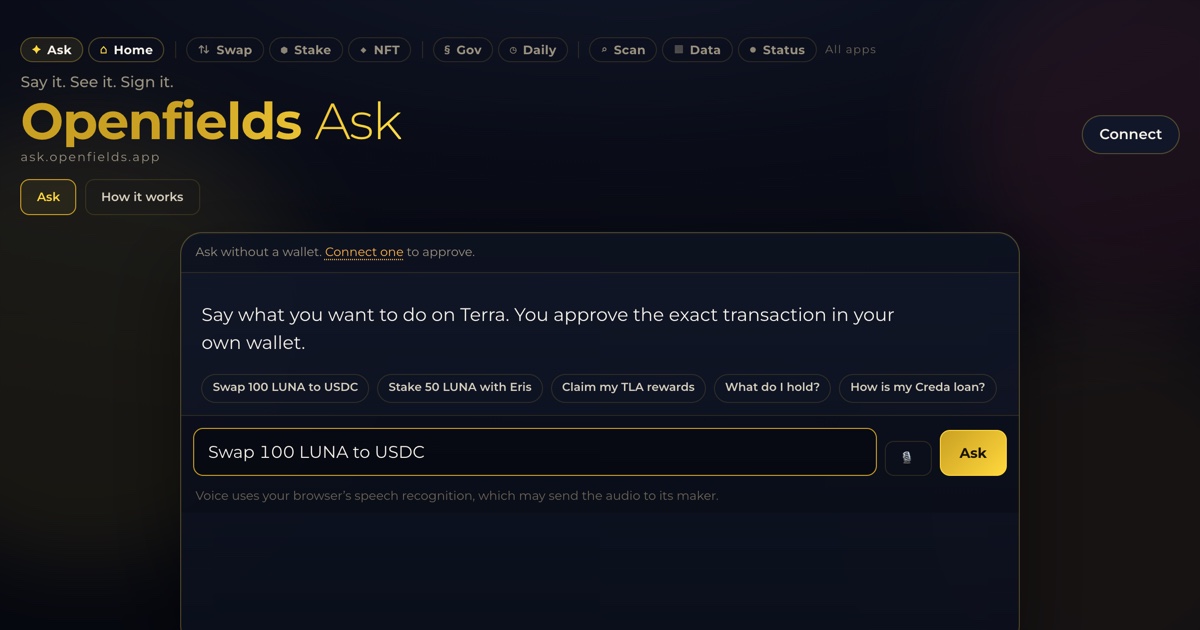
Openfields Ask takes a sentence, like swap 100 LUNA to USDC or how is my loan doing, and turns it into a transaction built in code. It simulates the transaction on chain, shows you what will happen and only then hands it to your wallet. It works on Terra and Injective. When Ask will not do something, it says so in plain words.
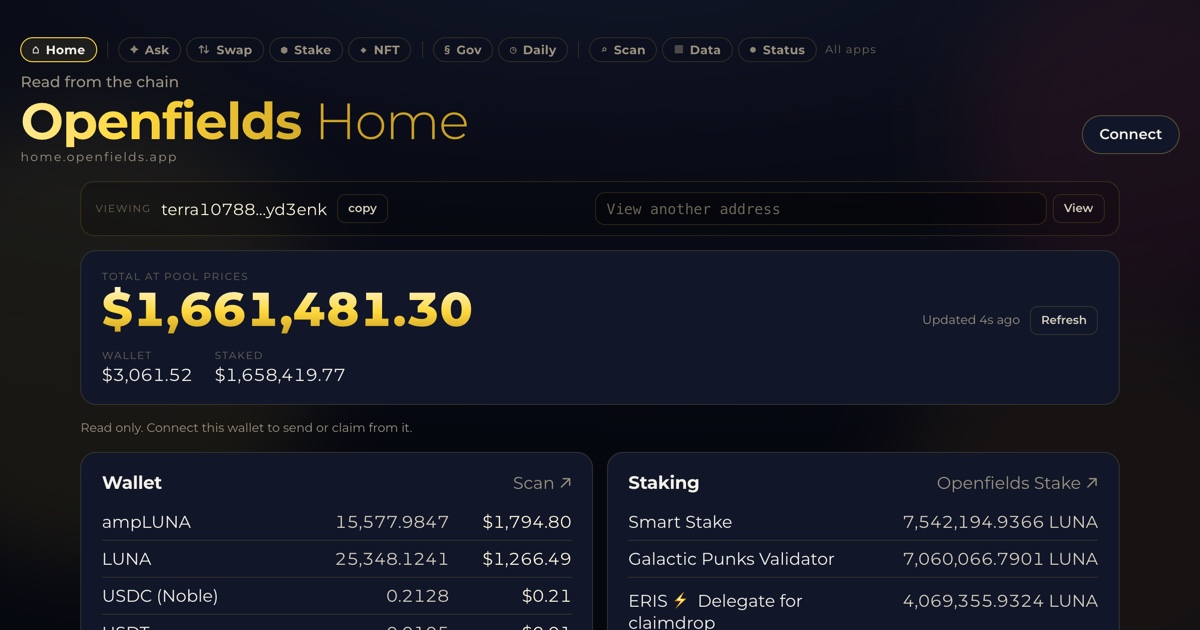
Openfields Home is one page for a wallet: what it holds, what it stakes, what it owes and what it votes on, read straight from the chain.
Do: Swap, Stake and Openfields NFT
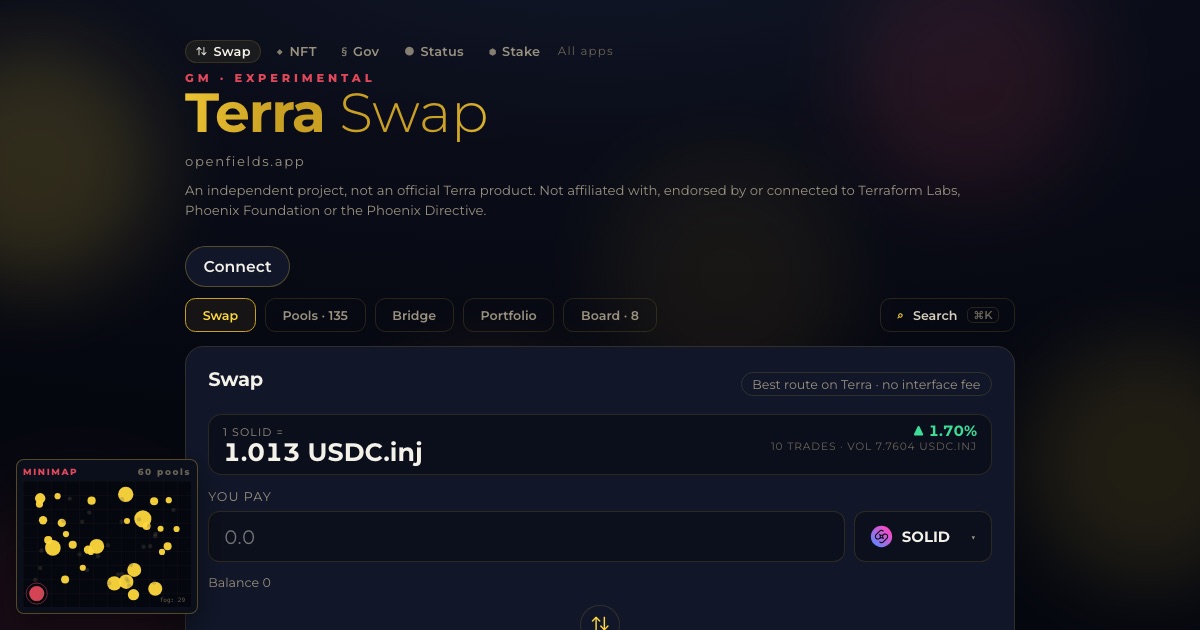
Openfields Swap is an open interface for permissionless pools. The pool factory's ownership has been renounced to a contract that can never use it, so nobody can change fees, upgrade the code or stop new pools, us included. The /verify page on the live site checks this against the chain, and the code is public.
Openfields Stake stakes LUNA, moves it between validators and collects rewards. Openfields NFT covers collections, items, listings and offers.
Take part: Gov and Daily
Openfields Gov shows proposals, votes and the community pool, readable before you vote. Openfields Daily is a small daily habit: one move, a calm minute and five questions about Terra.
Look up: Scan, Data and Status
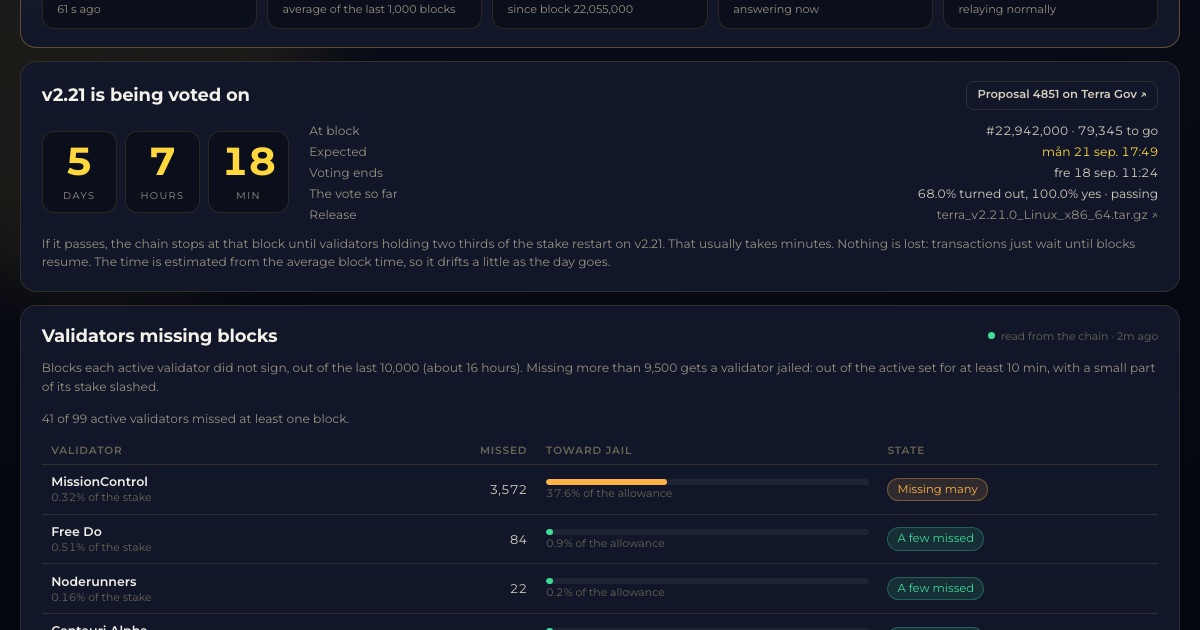
Openfields Scan finds transactions, addresses and blocks. Openfields Data shows how the apps on Terra are used. Openfields Status watches blocks, validators, bridges and public endpoints, live.
In your group chat
The Openfields bot for Telegram groups reads prices, wallets, open votes and the chain's status, posts new votes and runs a daily quiz. It never asks for a wallet, a key or a seed phrase, and it never sends anything on chain. Anything that acts is a link to the app made for it.
The rules every app follows
- You sign. Every app builds the exact messages, simulates them and shows them first. Nothing is held and nothing is signed for you.
- Your transactions carry a name. Every transaction an Openfields app signs starts its memo with the app's name, so you can always find it again.
- No accounts, no keys. No sign-ups, and no app will ever ask for a seed phrase.
- Experimental software. Read what you sign.
Next
The apps exist. The next step is making them work together. Read what comes next.